
Insights — Practical writing from the systems behind the work
AI workforces, automation accountability, operating discipline and what actually has to be true for business systems to keep moving reliably.
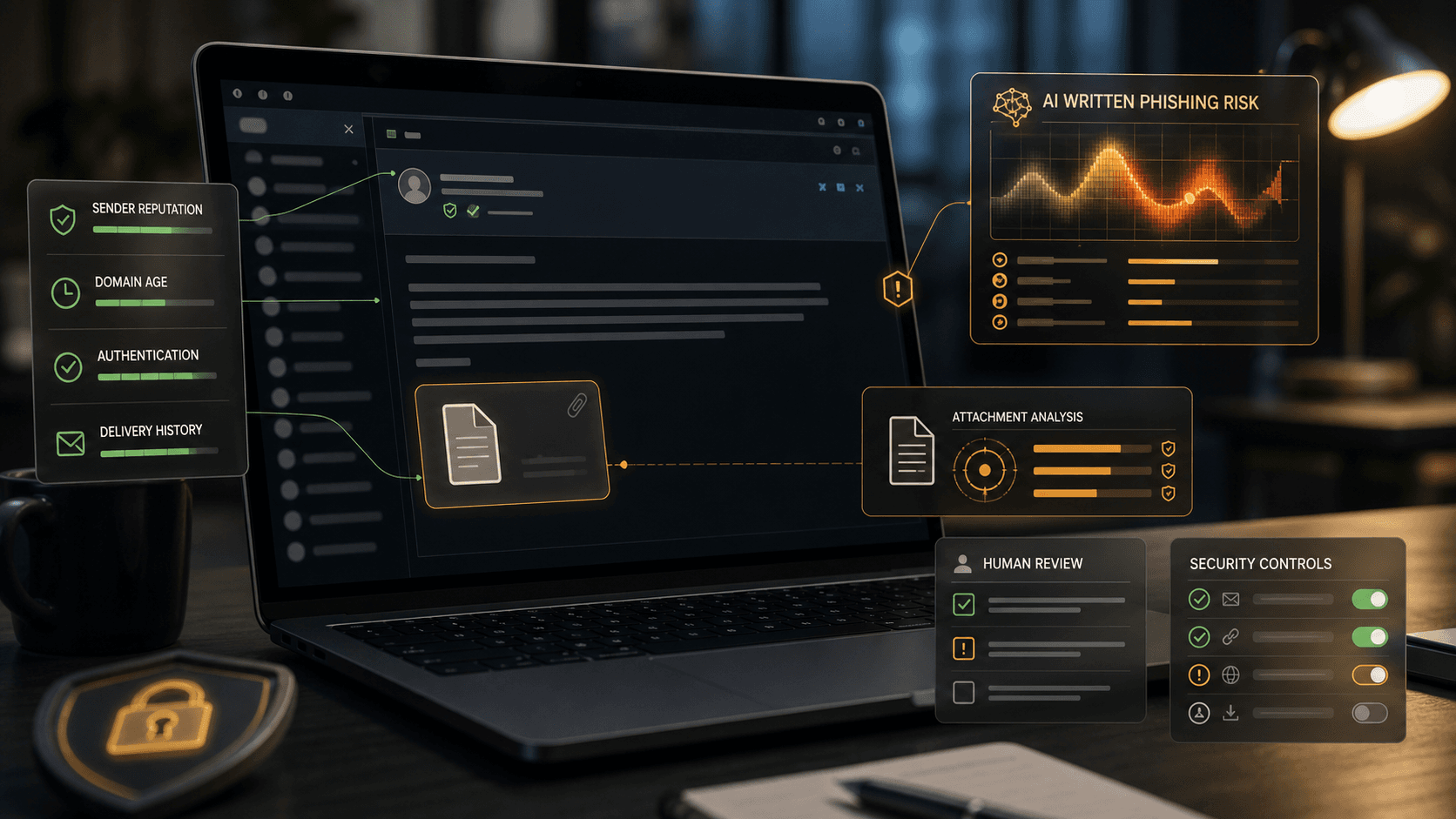
The Email Looked Verified. The Attack Was Written by AI.
LLMs are making phishing cleaner, faster, and harder to spot. The real danger is not bad grammar anymore. It is believable trust at scale.
AI Security Review Is Moving Earlier in the Workflow
GitHub’s July 14 security review preview matters because AI-native review is moving into the workstream before code lands, not just after the fact.
Agentic Autofix Is a Preview of AI Workers That Must Prove Their Work
GitHub’s July 10 agentic autofix preview is important because it doesn’t just propose a fix — it validates the result before handing it to a human reviewer.
Enterprise Copilot Governance Just Moved to the Device Layer
GitHub’s July 8 MDM release matters because AI workforce governance is moving from policy documents into actual endpoint-enforced configuration.
Microsoft Is Right: AI Alone Won’t Change the Business
The June 2 Microsoft thesis is the right correction to shallow AI adoption: the value is not in the model alone, but in the system built around it.
Trace-Based Evaluation Is Becoming the Real QA Layer for Agents
Microsoft Foundry’s May 30 update matters because it treats production traces, not static test sets, as the real evaluation surface for AI workers.
Computer-Using Agents Are Crossing from Demo to Workflow Layer
Microsoft’s May 26 Copilot Studio update is important because computer-using agents are getting paired with workflow design and real-time interaction, not just screen automation.
Managed Agents Are Moving AI Workforces Closer to Real Infrastructure
Google Cloud’s May 20 update matters because it pushes agent deployment away from improvised local setups and closer to shared cloud infrastructure with cleaner controls.
Google I/O Made One Thing Clear: Agent Orchestration Is Becoming the New Interface Layer
The biggest takeaway from Google I/O on May 19 was not just bigger models. It was the push toward agent orchestration, managed execution, and machine-readable workflows.
The Agentic Enterprise Is Here. Most Teams Still Don’t Have the Operating Model.
Google Cloud’s May 7 framing of the “agentic enterprise” is less about hype and more about a real change in how digital work is being structured.
AI Agent Observability Just Became a Production Requirement
IBM’s May 5 observability announcement matters because AI workers cannot be managed like black-box chat tools once they touch real business workflows.

AI Infrastructure Is Now Critical Infrastructure. Most Teams Still Defend It Like SaaS.
AI infrastructure has moved from optional tech stack to business-critical operating layer. That changes the threat model: physical resilience, prompt-injection-resistant operations, Zero Trust access, and supply-chain discipline now matter as much as model quality.
How Resend Helps Businesses Rank Faster Using AI and Email Deliverability
Most businesses treat email and SEO as separate channels. They're not. Your email list is the fastest path to getting your new content seen, shared, and linked to — and Resend makes building that pipeline almost frictionless. Here's the strategy.

Claude AI Found a Zero-Day RCE in Vim. The Maintainers Called It a Git Problem.
Anthropic's Claude AI found a real zero-day RCE in Vim 9.2 — you could compromise a system just by opening a markdown file. Emacs had the same vulnerability. Their maintainers refused to fix it. Here's what this means for every business running AI-assisted development today.
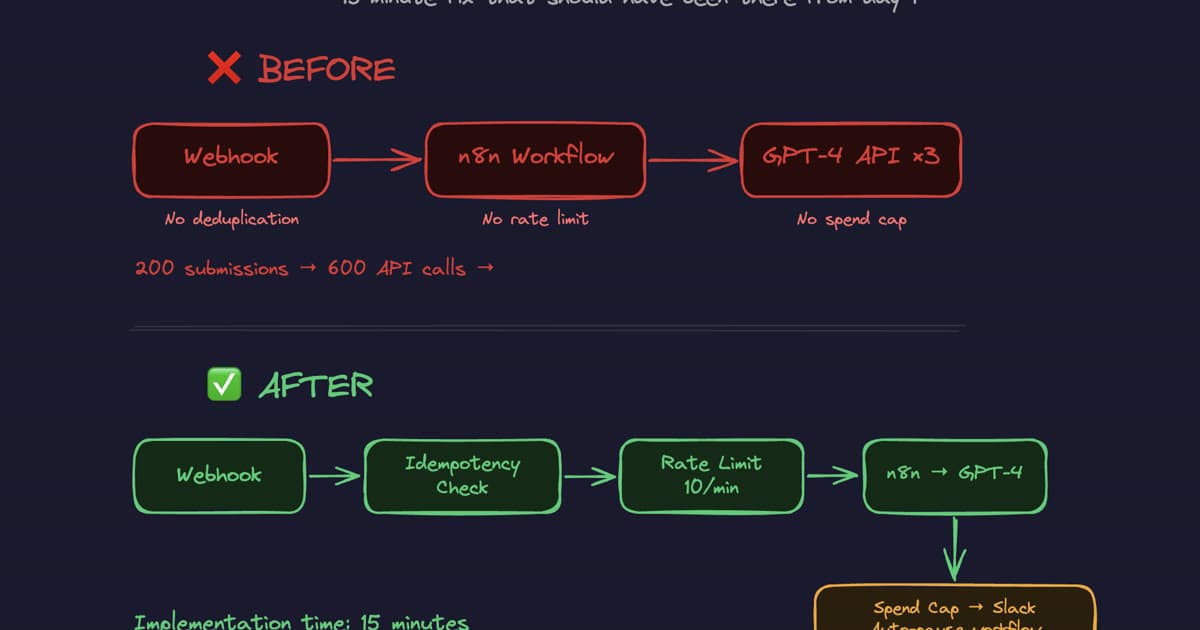
The $400 Mistake Every n8n User Will Make (And the 15-Minute Fix)
A webhook triggered a workflow. 200 test submissions came in. No deduplication, no rate limit, no spend cap. 600 API calls later, $400 was gone — in 11 minutes. Here's the exact fix.

How AI Agencies Help Manufacturers Reduce Delays and Manual Work
Manufacturers are losing hours daily to manual data entry, approval bottlenecks, and disconnected systems. AI agencies are deploying agent-based automation that cuts production delays, eliminates repetitive work, and surfaces problems before they become shutdowns.
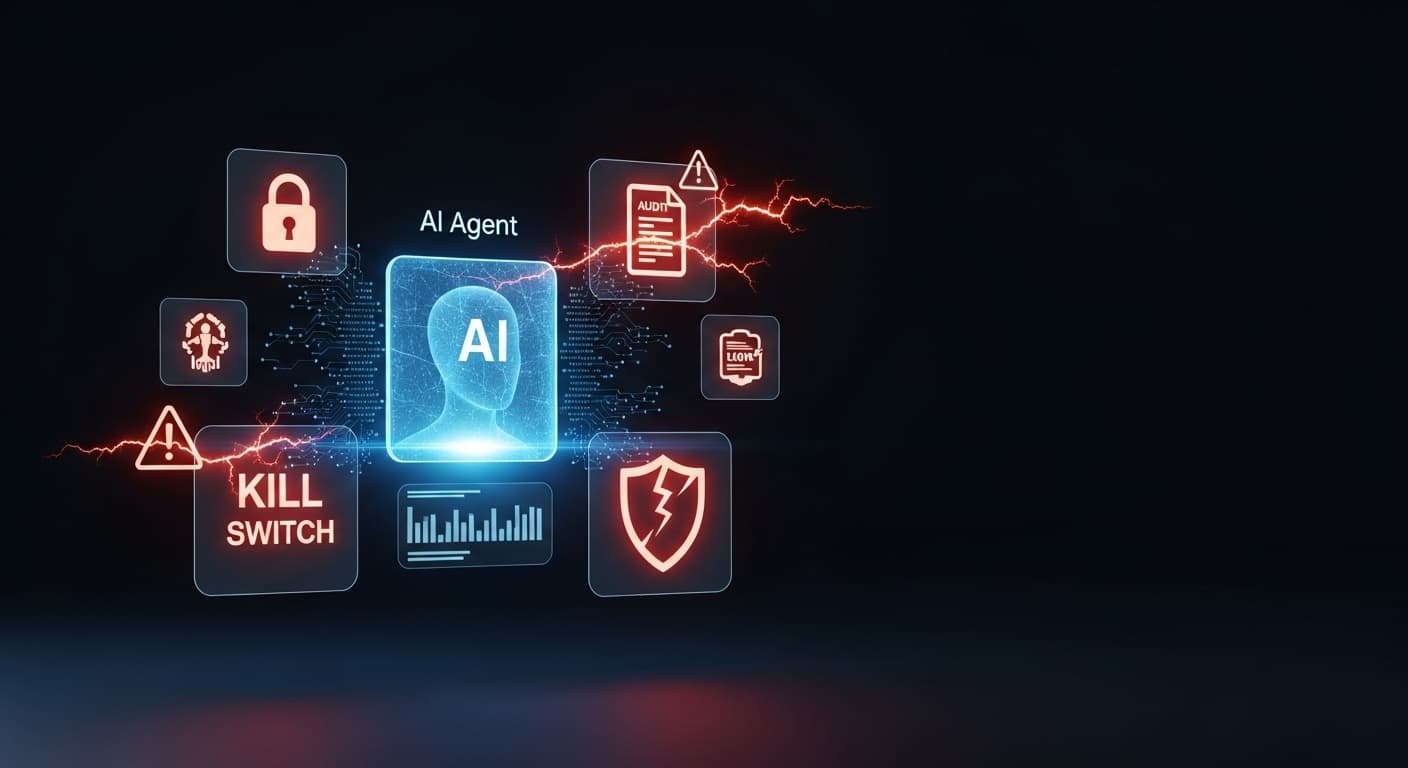
Is Your AI Agent a Security Liability? 5 Questions Every Team Must Answer
Your AI agent has access to your database, APIs, and customer data. But without an audit trail, kill switch, rate limits, input validation, and scoped permissions — it's not a business asset. It's a liability waiting to detonate.

7 Website Security Mistakes That Get You Hacked (And How to Fix Them)
Most website hacks aren't sophisticated. They exploit the same predictable mistakes — outdated plugins, weak credentials, misconfigured servers, and no monitoring. Here's what they are and exactly how to close them.

Chrome Zero-Day CVE-2026-3909 & 3910: 3.5 Billion Users at Risk — Update Now
Google has issued an emergency patch for two active zero-day vulnerabilities in Chrome — CVE-2026-3909 and CVE-2026-3910. Here's what they are, what's at risk, and exactly what to do right now.

From Manuscript to Multi-Voice Audiobook in One Session: How We Built the Pipeline
We built an AI agent on OpenClaw that takes a raw book manuscript, splits it by chapter, assigns distinct voices to each speaker, and outputs production-ready MP3s — all in a single automated run. Here's exactly how it works.
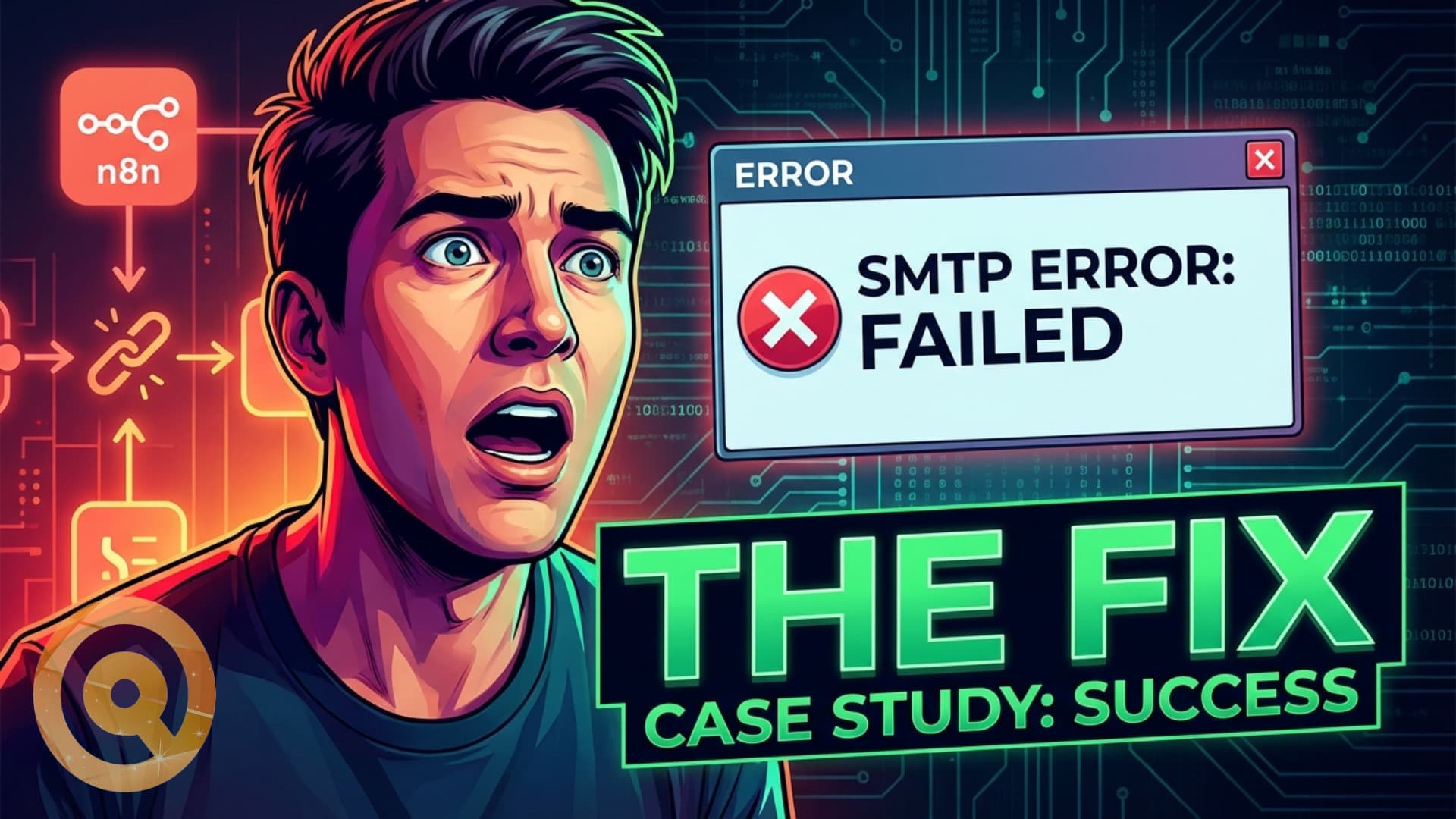
The SaaS Onboarding Automation That Silently Failed 85 Users in One Night
A SaaS founder's onboarding automation broke without a single alert. 85 out of 100 new users never got a welcome email. Here's exactly what broke, how it was fixed in 12 minutes, and what you need to add to every automation before it costs you customers.

The One-Person Company Powered by AI Agents: How to Replace an Entire Team
AI agents aren't just tools anymore — they're doing the work of employees. Here's how to build, run, and manage a fully operational company where AI handles ops, support, content, and decisions.
OpenClaw Security: Must-Have Fixes Before You Go Live
Most people set up OpenClaw and forget the security layer entirely. Here's the exact hardening checklist — API keys, VNC, channel access, credential storage, and agent isolation — before you expose it to the real world.
WordPress Security Hardening: The Checklist We Actually Use
A practical, no-fluff checklist for hardening WordPress sites — covering file permissions, login protection, headers, and server-level controls.